
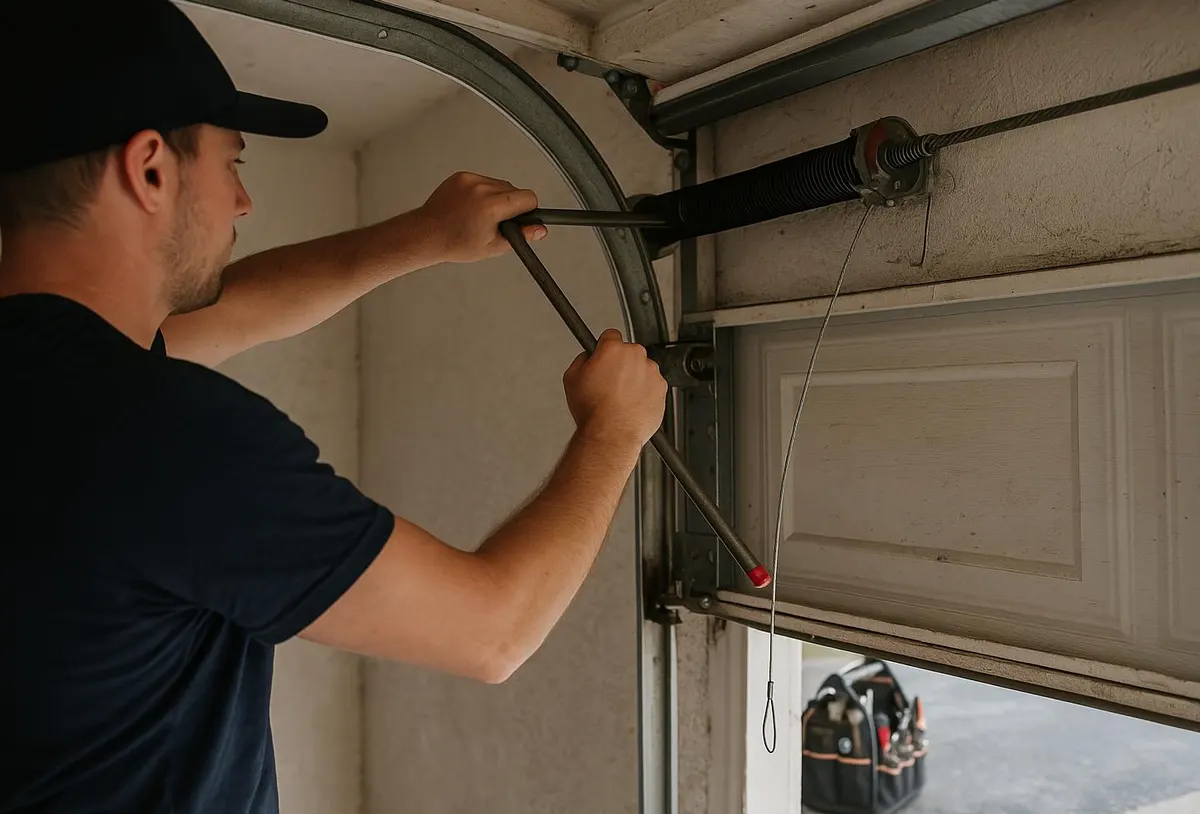
What a Technician Sees This Time of Year
Right about now, the calls start coming in. A homeowner notices the door is suddenly groaning on its way up, or it stutters halfway open and stalls. Someone else finds a half-inch gap of daylight under the door where wind is whistling through. Another call is for a door that flat out won't budge one cold morning — the opener hums but nothing moves. Almost every one of these has the same root cause: the door worked fine all through a humid Michigan summer, nobody touched it going into fall, and the first hard cold snap exposed every weak point at once.
Garage doors don't fail because of one dramatic event. They fail because small issues — a dry hinge, a worn seal, a spring that's been overdue for years — get pushed past their limit by cold, ice, and road salt tracked in on tires and boots. A little attention now, before the deep freeze sets in, prevents most of those emergency calls.
Why Cold Weather Is Hard on Garage Doors
Metal contracts in the cold, which changes tension on torsion springs and tightens tolerances on rollers and tracks. Standard lubricant thickens and stops doing its job right when you need it most. Rubber weatherstripping around the bottom and sides hardens and cracks with repeated freeze-thaw cycles, letting in cold air, snowmelt, and mice looking for shelter. And in this part of Michigan, road salt is a year-round visitor once winter hits — it rides in on the car, splashes onto the bottom panel and tracks, and accelerates rust on hardware that isn't cleaned off.
None of this happens overnight. It builds up over a winter or two until a spring snaps on a sub-zero morning, or a panel rusts through at the bottom corner. A short fall checkup catches most of it early.
A Practical Pre-Winter Checklist
Lubricate the Moving Parts
Hinges, rollers, the torsion spring, and the track all need a fresh coat of a silicone-based or lithium-based garage door lubricant — not household oil, which gums up in the cold and attracts grit. Wipe off old grease and road grime first, then apply lubricant to every pivot point. Do this before temperatures drop consistently below freezing; it's much easier to work with warm hands and warm hardware.
Inspect and Replace Weatherstripping
Run a hand along the bottom seal and the side/top weatherstripping. If it's cracked, flattened, or pulling away from the frame, replace it before winter. A gap as small as a quarter inch lets in enough cold air to spike heating costs in an attached garage, and it's an open invitation for mice and spiders looking for a warm spot. Bottom seals are inexpensive and straightforward to swap out; stiff or torn ones should not be left to ride out another winter.
Test the Balance
Disconnect the opener by pulling the release cord, then lift the door halfway by hand and let go. A properly balanced door stays put. If it drifts up or crashes down, the springs are compensating poorly for the door's weight, and that strain only gets worse as metal contracts in the cold. This is a sign the springs need adjustment or replacement — not a DIY repair, since torsion springs are under serious tension and can cause injury if handled without the right tools.
Check the Springs Themselves
Look for visible gaps in the coils, rust, or stretching. Springs are rated for a certain number of cycles, and most wear out gradually rather than suddenly — until the day they don't. Cold weather is the most common trigger for a spring that was already near the end of its life. If yours hasn't been replaced in several years and the door has started feeling heavier or noisier, fall is the time to deal with it, not January at 6 a.m. in the cold with the car stuck inside.
Test the Opener and Backup Battery
Run the door through a full open-close cycle and listen for grinding, hesitation, or uneven movement. Check the manual release mechanism to confirm it still works in case of a power outage, which is more common during winter storms. If the opener has a battery backup, test it now rather than discovering it's dead during an ice storm.
Clear and Protect Tracks
Wipe down the tracks to remove any accumulated road salt residue and grime, especially near the bottom. A damp cloth followed by a light coat of lubricant on the track-roller contact points helps prevent corrosion before snow and salt season really gets going.
One Thing Worth Doing Before Mud Season Arrives
It's easy to focus only on the cold months ahead, but keep in mind what follows: spring thaw brings mud, standing water, and more salt residue washing off vehicles. A door that's properly sealed and lubricated now handles that transition far better than one that went into winter already worn down.
When to Call Hamtramck Garage Door
If the balance test shows a problem, the springs look worn, or the door is making noise that lubrication doesn't fix, it's time to call in a technician rather than push through the winter. Hamtramck Garage Door handles spring replacement safely with the right tension tools, and offers full garage door maintenance visits that cover lubrication, weatherstripping, hardware inspection, and opener testing in one appointment. Catching a worn spring or cracked seal in October is a lot less stressful than dealing with a stuck door during the first big snow.
If your garage door feels off heading into winter, call Hamtramck Garage Door today and get it checked out before the cold sets in for good.